
Telephone:
0086-512-63339531
Telephone:
0086-512-63339531
Name:Suzhou Feibo Heat & Cold Shrink Products CO.,LTD.
Address:Jinxin Road No. 2848,Jinjiaba Town, Wujiang District, Suzhou,Jiangsu, China (Mainland)
Tele:0086-512-63339531
Mobi:+86 13013866728
Fax:0086-512-63206968
Zip:215215
Web:www.fblrs.com(English)
www.fblrs.cn (Chinese)

EPDM vs Silicone Cold Shrink Tubing: What Is the Right Choice for Your Cable Project?
Cold‑shrink tubing is a critical cable accessory widely used for insulation, sealing and stress relief on power cable joints and terminations. The two most common base materials for cold‑shrink products are EPDM (Ethylene Propylene Diene Monomer) and silicone rubber. What are the differences between EPDM cold shrink tubing and silicone cold shrink tubing ?
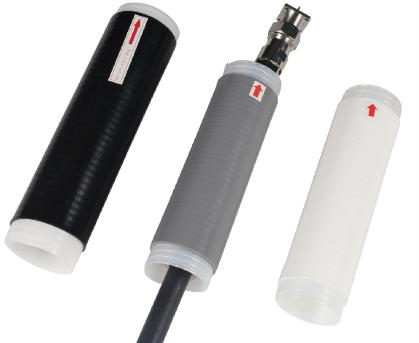
Understanding the differences between EPDM cold shrink tubing and silicone cold shrink tubing helps electrical engineers,and buyers select cost‑effective insulation solutions.
1.Temperature performance -the differences between EPDM cold shrink tubing and silicone cold shrink tubing
Silicone cold shrink tubing supports a much wider working temperature spectrum. It can stably run from ‑60°C up to 180°C. Short‑term peak temperature tolerance also stands at a higher level. This makes silicone suitable for locations with extreme heat or extreme cold, such as desert substations, high‑altitude outdoor power stations and equipment with continuous high‑heat generation.
EPDM cold shrink tubing works within ‑40°C to 125°C. It handles normal daily temperature fluctuation well, yet cannot sustain long‑term ultra‑high‑temperature exposure. For most conventional overhead cables, cabinet busbar and general‑purpose cable joints, EPDM temperature capacity meets standard operational requirements.
2. Chemical and Environmental Resistance--the differences between EPDM cold shrink tubing and silicone cold shrink tubing
Silicone rubber: Weak resistance to hydrocarbon oil, solvent and petroleum‑based liquids. When exposed to engine oil, diesel or grease for a long time, silicone material will swell and degrade. It shows excellent resistance to moisture, salt spray and weak acid‑base environments.
EPDM rubber: Resists polar chemicals, water, steam, salt fog and dilute acid and alkali. It is not compatible with mineral oil either, yet shows better tolerance to some polar chemical medium compared with silicone. EPDM is widely applied in underground cable pits, wet cabinet environments and industrial sites with occasional chemical splash.
3. Electrical Insulation Performance--the differences between EPDM cold shrink tubing and silicone cold shrink tubing
Both materials satisfy IEC power‑accessory insulation standards.
Silicone owns excellent dielectric properties, stable dielectric strength under wide temperature variation. Its insulation performance barely drops when temperature rises, so it is favoured for medium‑high‑voltage cable termination accessories (10kV‑35kV).
EPDM provides reliable insulation for low‑voltage and medium‑voltage systems. Its insulation capacity works stable within its rated temperature scope. EPDM cold shrink tubes are a cost‑effective option for most general‑voltage power distribution projects.
4. Physical Properties & Installation Features--the differences between EPDM cold shrink tubing and silicone cold shrink tubing
Silicone cold shrink tubing: Higher elasticity, high recovery rate. It keeps good resilience after long‑time radial expansion. The drawback is higher raw‑material cost.
EPDM cold shrink tubing: Good elasticity and mechanical tear strength. It is tougher against physical abrasion during transportation and field installation. EPDM material costs are more competitive for large‑volume projects.
Neither EPDM nor silicone cold shrink tubing is universally superior.
Silicone rubber: Premium‑grade material, wide temperature range, top‑notch outdoor anti‑ageing performance, ideal for harsh outdoor and high‑voltage working conditions with higher budget.
EPDM rubber: Cost‑efficient, good mechanical strength, qualified insulation performance for most power distribution scenarios, best choice for indoor and semi‑outdoor conventional cable projects.
When selecting cold shrink insulation sleeves, buyers should evaluate operating temperature, outdoor exposure level, chemical surroundings, voltage class and project budget to make the optimal material decision.
Name:Suzhou Feibo Heat & Cold Shrink Products CO.,LTD.
Address:Jinxin Road No. 2848,Jinjiaba Town, Wujiang District, Suzhou,Jiangsu, China (Mainland)
Tele:0086-512-63339531
Mobi:+86 13013866728
Fax:0086-512-63206968
Zip:215215
Web:www.fblrs.com(English)
www.fblrs.cn (Chinese)
Suzhou Feibo Heat And Cold Shrinkable Products Co.,Ltd.